




Public Health Newswire from The Nation’s Health brings you the news you need now


Public Health Newswire
U.S. systems and policies neglect importance of pets to families’ lives
- Melanie Padgett Powers
Americans are pet people. Go into any U.S. home and chances are you’ll find a dog, cat or other critter — it’s estimated that anywhere from 58% to 71% of U.S. households have at least one pet.
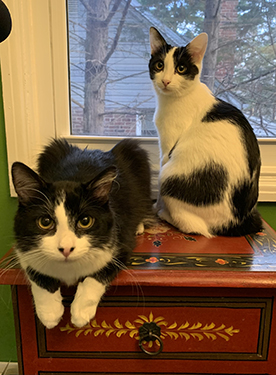
To most pet owners, their pets are not just animals that share their living space. They are family: 97% of U.S. pet owners say their pets are part of their family, according to the Pew Research Center. And 51% of pet owners go further and say their pets are as much a part of their family as a human family member.
 And yet, a wide variety of systems, infrastructure and policies in the U.S. do not take these facts into consideration.
“Families are already organizing their lives, resources, responsibilities and decisions around both people and pets, while many of the systems they depend upon were not designed to recognize or respond to those relationships,” said Michael J. Blackwell, founder and director of the University of Tennessee Center for Pet Family Well-Being. Blackwell is a former U.S. assistant surgeon general and chief veterinary officer of the U.S. Public Health Service.
On Saturday, about 75 public health professionals — animal lovers, advocates, veterinarian and other clinicians, and researchers on the human-animal bond — gathered for the one-day One Health Systems Summit, an APHA partner event held before APHA’s 2026 Annual Meeting and Expo in San Antonio, Texas. The event was hosted by the University of Tennessee Center for Pet Family Well-Being.
The pre-conference workshop aimed to bring together public health professionals across health, housing, social services, animal welfare, education and policy to address the structural failures affecting families and pets. The event was intended to begin building a movement that integrates systems to better reflect 21st century U.S. families — which often include pets.
The One Health approach recognizes that the health of people, other living beings and the environment they share is interconnected. Blackwell’s center has been developing a One Health Systems framework that sees families more completely and aligns systems that their health and well-being depend on. The framework has four sectors:
- Health and well-being
- Economic and community support
- Housing, transportation and infrastructure
- Education, policy and research
“We separate these four sectors to make the framework understandable; families do not, however, experience them separately. An unmet need in one sector can quickly affect every other part of family life.” Blackwell said.
Living with Gizmo, the chihuahua
Keynote speaker Amelie G. Ramirez, director of the Institute for Health Promotion Research at UT Health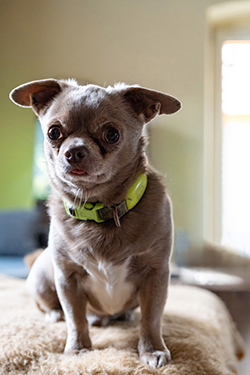 San Antonio, painted a picture of pet challenges a typical Hispanic family might face.
Hispanics are the largest minority in the U.S., making up 20% of the population. They also have the second highest pet ownership, Ramirez said.
Ramirez described a Latino family with two parents, two kids and a beloved chihuahua named Gizmo. Chihuahuas are prone to several health conditions, including dental disease, heart disease and eye problems. This requires specific care, early intervention and system management, she said.
One in three Latino families live in poverty. Gizmo’s owners work long hours in a San Antonio restaurant but earn less than $15 an hour.
Veterinary care, medications and special diets can be expensive. The family doesn’t have pet insurance, and unlike with human emergency rooms, veterinary ERs are not required to take care of animals in an emergency. Over half (52%) of pet owners have skipped or declined necessary veterinary care for their pets, according to a PetSmart Charities-Gallup survey.
As renters, Gizmo’s owners must pay a $300 pet deposit and monthly $35 pet fee to their landlord. Affordable housing is farther from their downtown jobs, so a longer commute means spending more time away from home and Gizmo. They often travel by city buses, which doesn’t allow pets.
“Whenever he needs to go to the vet, the family relies on other family or friends to help them get to and from his appointment, and it takes a long time to coordinate their schedules, and one of the adults has to take time off from work,” Ramirez said.
The family doesn’t live near a supermarket. They lack access to healthy affordable food and often have to rely on convenience stores and drug stores. When the vet put Gizmo on a special dog food diet, it was expensive and not carried in nearby stores.
Restructuring systems to integrate pets
As illustrated by Gizmo’s family, many rules and policies don’t integrate pets and don’t recognize the value of the human-animal bond, said Claire Schuch, associate director of research at the Center for Pet Family Well-Being. The burdens these systems put upon families with pets is not borne equally either, as low-income families often face greater financial decisions, she said.
“Systems were largely designed based around this 20th century definition of family that didn’t include pets. Yet, for most American households, pets are now family,” Schuch said. “When systems fail to recognize the bond, they don’t just fail the pet; they fail the human attached to it, which can mean housing instability, delayed veterinary care, mental health strain and workforce (challenges).”
The speakers asked public health professionals to ask people about their pet ownership, recognizing that that affects people’s lives in ways that might not be obvious without asking. An unhoused person may refuse temporary housing because pets aren’t allowed. A person experiencing intimate partner violence may stay because they don’t want to leave their pets.
“Asking about pets can reveal barriers you wouldn’t otherwise know. And it certainly builds trust, and they’re more likely to share something,” said Rustin M. Moore, dean of the College of Veterinary Medicine at The Ohio State University.
He continued, “What looks like non-compliance is probably related to the responsibility of caregiving for that pet, and we should not make those judgments and (should) focus on the why and how we can actually change it.”
Other questions to consider:
- What assumptions about family are embedded in the systems where you work?
- Where do families’ needs fall between sectors even when committed people are trying to help?
- What would have to change for support of families to become dependable and sustainable?
A system that takes into account the entire family, pets included, goes beyond a “pet-friendly” system, the speakers stressed.
“A pet-friendly system adds the pet on to the family … and I think that really misunderstands the point where we’re starting to get to now, where we recognize that the pet actually changes the family — the family becomes something else when the pet is introduced in the way that they live their lives,” said Vanessa Ashall, who leads the human-animal interaction program at the Waltham Petcare Science Institute in England.
Photos by Melanie Padgett Powers (top) and Gundula Vogel, courtesy Pexels.