


Public Health Under Threat
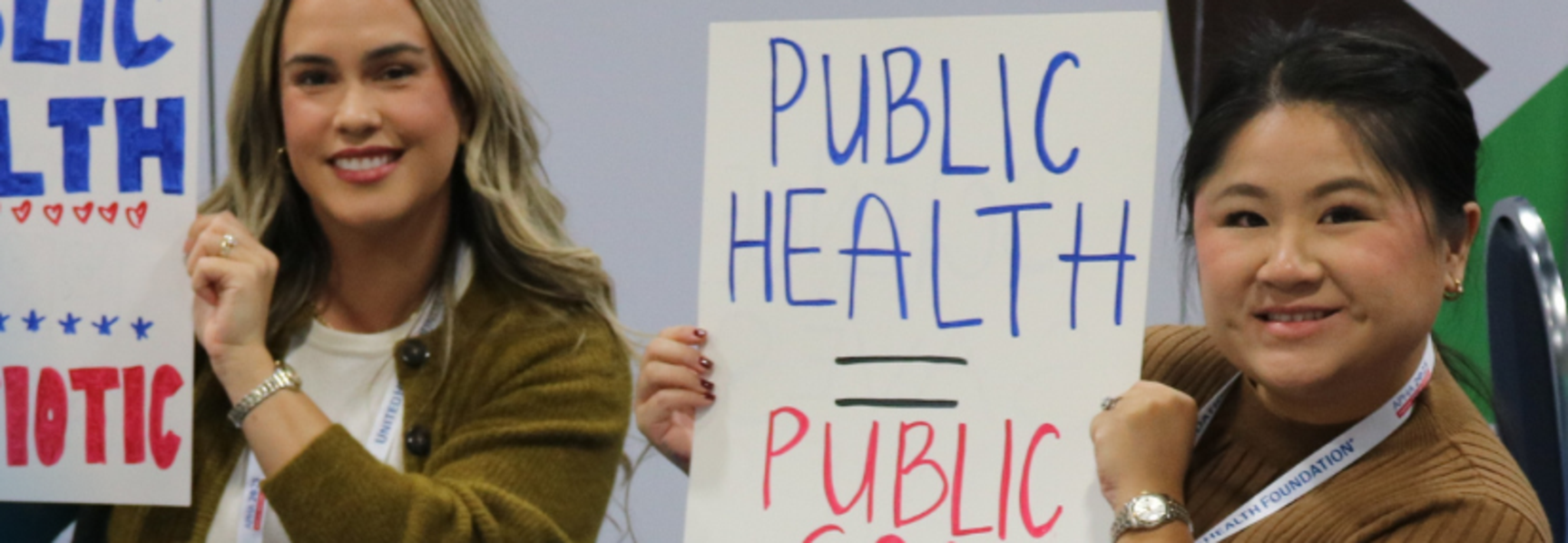

Join us in protecting science-based vaccine access!
More sick children. More hospitalizations. More preventable deaths. The Administration, through RFK, Jr., unilaterally and with no evidence made changes to the vaccine guidelines. The public health impact is clear, and we knew it could not go unchallenged. When vaccine guidance is weakened without clear scientific support, people feel it.
This is the moment to protect science-based vaccine guidance and access to care. Donate today and join the public health community as we continue this suit and related efforts to defend the science that keeps our children safe.
Legal Actions APHA Has Been Part Of:
Coalition Sues Trump EPA for Failure to Implement Life-Saving National Soot Standard
APHA and several organizations sue EPA over illegal repeal of climate protections
APHA Joins Others to Sue HHS, Robert F. Kennedy, Jr. for Unlawful, Unilateral Vaccine Changes
Researchers Challenge NIH's Politically Driven Grant Cancellations
The Latest on How APHA Is Protecting Public Health (August 2026)
Senate confirms Dr. Erica Schwartz as new CDC director
On Aug. 5, the U.S. Senate voted 51-44 to confirm Dr. Erica Schwartz as the director of the Centers for Disease Control and Prevention. Schartz will face significant challenges as she takes the helm of the agency that has suffered from efforts to eliminate critical public health infrastructure funding, significant cuts in staffing and efforts by the Trump administration, under the leadership of HHS Secretary Robert F. Kennedy, Jr., to upend the evidence-based federal vaccine policy making process.
APHA issued a statement following her confirmation welcoming Dr. Schwartz to the position and pledging to work with her to rebuild trust in public health leaders and advance proven practices and policies to enhance public health by preventing and controlling diseases and injuries.
APHA opposes HHS Medicaid work requirement rule
On July 31, APHA joined other leading public health organizations and deans and scholars of public health in submitting comments urging the U.S. Department of Health and Human Services to withdraw its interim final rule implementing the Medicaid work requirements Congress passed as part of H.R. 1, arguing the regulation unlawfully exceeds the statute and would unnecessarily jeopardize health coverage for millions of Americans.
In its comments, the coalition urged HHS to withdraw the rule in its entirety or, at minimum, eliminate provisions requiring individuals to demonstrate that medical conditions significantly impair their ability to work, restore broader self-attestation and data-based verification options, and align implementation with congressional intent.
In a statement issued after the comments were submitted, APHA CEO Dr. Georges C. Benjamin stated “This damaging rule goes well beyond the concerning provisions contained in the underlying legislation, which APHA also strongly objected to during its consideration in Congress. Not only will this proposal result in the loss of health coverage for millions of Americans, but it will also disproportionately harm those most at risk, including those with chronic and complex medical conditions. The administration should revoke this rule, and any revised rule must adhere to Congressional intent to honor the exclusions from the community engagement requirements explicitly mandated in the text of H.R. 1.”
APHA opposes legislation to block OSHA workplace heat standard
On July 21, APHA joined other leading, health, labor and consumer organizations in sending a letter to the House Committee on Education and Workforce in opposition to H.R. 6213, the Heat Workforce Standards Act. The bill would prohibit the Secretary of Labor from finalizing, implementing, or enforcing a federal heat injury and illness prevention standard, or any substantially similar measure. APHA submitted comments to OSHA in 2025 in support of a comprehensive public health rule to prevent heat related injuries and illnesses and has urged OSHA to finalize a rule as soon as possible.
H.R. 6213 would permanently prohibit the Department of Labor from finalizing, implementing, or enforcing a federal heat standard. The bill includes no sunset provision, no mechanism for future reconsideration, and no opportunity for action as heat-related injuries and fatalities continue to increase. The legislation ignores the extensive process OSHA has already undertaken to develop a common-sense heat standard. The agency's proposed heat injury and illness prevention standard is the result of research, stakeholder engagement, public hearings, and review of over 43,000 public comments. OSHA estimates the rule would protect approximately 36 million workers, and research has previously estimated that a comprehensive federal heat standard could prevent at least 50,000 heat-related injuries and illnesses each year.
Unfortunately, the legislation was reported out of the committee by a vote of 18-15 and awaits potential consideration on the floor later this fall. APHA will continue to monitor the bill and oppose efforts to move it forward.
APHA supports bipartisan Alan Reinstein Ban Asbestos Now Act of 2026
On Aug. 3, Senators Jeff Merkley (D-OR) and John Curtis (R-UT), introduced the Alan Reinstein Ban Asbestos Now Act of 2026. The scientific evidence is unequivocal: exposure to asbestos poses a grave risk to health and there is no safe use of asbestos. Nearly every industry in the U.S. adopted alternatives to asbestos decades ago.
The bipartisan Alan Reinstein Ban Asbestos Now Act of 2026 would:
- Ban commercial asbestos by prohibiting its manufacture, processing, use, and distribution in commerce.
- Cover all six historically regulated asbestos fibers.
- Establish durable public health protections and codify federal transition requirements.
APHA has long supported efforts to ban the importation, manufacture, processing and distribution in commerce of asbestos and asbestos-containing products. Upon the legislation’s introduction, APHA CEO, Dr. Georges C. Benjamin stated, “There is overwhelming consensus in the scientific community that there is no safe level of asbestos exposure. APHA continues to support legislation like the Senate’s Alan Reinstein Ban Asbestos Now (ARBAN) Act to protect the public’s health by eliminating all asbestos imports and use.”
The bill has been referred to the Senate Committee on Environment and Public Works.
Senate releases Farm Bill draft that maintains harmful SNAP cuts
On July 31, the Senate Agriculture Committee released a new Farm Bill draft that is intended to be marked up soon. Unfortunately, the draft bill fails to include many provisions that are necessary to maintain strong nutrition safety net programs and fight hunger. First, the draft bill – like the version of the bill passed by the House in April – fails to restore cuts that were made to the Supplemental Nutrition Assistance Program in last year’s One Big Beautiful Bill Act. Those cuts, amounting to $187 billion slashed from the program over 10 years, would have dire impacts on state budgets and the 41 million Americans who rely on the SNAP program to feed their families. As a concession to Democrats, the Senate draft would enact the almost-$200 billion in cuts one year later than the House bill, but that doesn’t negate the harm that will be done by the cuts – analyses show that since the cuts were passed by Congress, almost 5 million people have already lost access to the SNAP program.
The committee held a markup on the draft on Aug. 6, and after a partisan vote of 10-11, the committee failed to pass the bill out of markup. Democrats would not lend their support to the bill due to its failure to support the SNAP program.
APHA advocates can reach out to their Senators and urge them to reject the House-passed bill, reject the Senate draft, and instead fight for a Farm Bill that strengthens SNAP and feeds American families.
Join us during the August congressional recess to boost the collective public health voice!
August’s congressional recess is here again, with the House recessing Jul. 24 through Aug. 30 and the Senate recessing Aug. 8 through Sep. 13. While members are home in their districts and free of hearings and votes, join APHA in calling on Congress to champion public health! Here are some ways you can make your voice heard for public health:
- Send action alerts to your members of Congress on public health funding, gun violence prevention, and other priority issues, and don’t forget to share the alerts with your sections and networks!
- Attend a town hall with your elected official – you can check their town hall schedule on their website – and ask them questions about their commitment to public health.
- Set up a meeting with your member of Congress – virtual or in-person – and use APHA’s updated state fact sheets and public health funding fact sheet to urge them to support strong public health funding in fiscal year 2027. · Ask your members about their score in APHA’s 2025 Congressional Vote Scorecard.
APHA's Role in Defending Public Health
APHA is fighting back. We remain steadfast in our efforts to challenge harmful policies, advocate for evidence-based approaches and defend the well-being of all Americans.




APHA on key public health policy issues
Hear what APHA has to say about policy proposals that will impact public health.

EPA Sued Over Repeal of Power Plant Carbon Reduction Rules
Environmental and public health groups sued to stop the Environmental Protection Agency’s repeal of critical standards for power plant carbon pollution.
New report shows that cuts to SNAP and WIC are fueling a hunger and public health crisis
Federal cuts to food assistance programs are inflicting real hardships for American families. Millions are losing access to SNAP and WIC as grocery prices continue to climb. Today, the Campaign for the Public's Health, an American Public Health Association initiative, released a new report in partnership with Protect Our Care.
New Control of Communicable Diseases Manual includes info on a potentially first climate-driven disease
“In an era of increasing numbers of infectious disease outbreaks, it’s important to have a reliable, fact-based source, to consult. CCDM is that go-to, essential resource for epidemiologists and other public health practitioners, clinicians and laboratorians working to keep communities safe and informed,” says Dr. Troisi.
Public Health Leaders and 169 Scholars File Amicus Brief Challenging CMS Medicaid Work Requirement Rule
Amici argue new federal rule could cause millions of people with serious health conditions to lose Medicaid coverage
Other Resources:
The Union of Concerned Scientists (UCS) is tracking attacks on science at the federal level. View the tracker and methodology.
How you can help

Donate to APHA
Make an impact on public health through your donation.
Contact your members of Congress
Urge congress to support public health.
Fight for science-based policies
Stand up for public health interests by donating to help APHA Speak for Health.