


Communicable Disease
Featured: Plague
Plague is an ongoing problem in many parts of the world, owing to the widespread distribution of wild rodents. These animals act as hosts to fleas who transmit the causative organism, Yersinia pestis, to humans. At present, plague associated with flea-infected rats is highly unusual in urban areas. Case fatality rates for untreated bubonic plague, named for the swollen and often suppurative lymph nodes (buboes), are 50%–60%. Septicemic plague, in which the infection spreads widely (in some cases to the meninges), may be induced either as primary infection or be secondary to bubonic infection. The pneumonic form similarly may be either primary, via inhalation of droplets containing the pathogen, or secondary, via spread from buboes. Pneumonic plague is considered potentially a severe public health concern because of the relative ease with which plague bacilli could be aerosolized by malign actors. Plague can be treated with prompt administration of streptomycin or other antibiotics.
While direct person-to-person transmission of bubonic plague requires direct contact with buboes or pus, the pneumonic form can be transmitted via inhalation, especially to close household contacts. For that reason, chemoprophylaxis is sometimes recommended. All cases should be reported to local authorities, and in the event of widespread pneumonic plague, a malign act should be a prominent concern.
Read the chapter on plague in the Control of Communicable Diseases Manual.
Prevention
There are many ways to prevent the spread of disease. Vaccinations have helped eliminate or greatly reduced disease threats. Proper handwashing, especially before and after handling food and using the toilet, helps keep germs at bay.
Other important ways to slow or stop disease transmission are by ensuring the food we eat and water we drink is safe, avoiding people who are sick and practicing safe sex.
About Communicable Diseases
Some diseases spread from one person to another while others can spread from animal to person. Some are spread through the air, by touch or through bodily fluids. Some diseases may produce mild symptoms; others can be lethal. As APHA member Jonathan Fielding, professor of public health and pediatrics at UCLA, writes in this op-ed, "Without the necessary funds, fighting Zika, Ebola and other infectious disease is a losing battle."
Additional Resources
Communicable Disease Examples
More than 200 infectious diseases are listed in APHA’s Control of Communicable Diseases Manual.

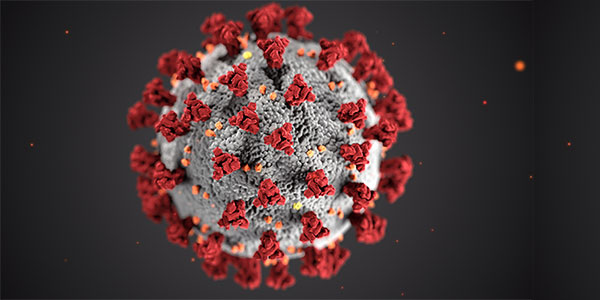
COVID-19
COVID-19 is a disease caused by the SARS-CoV-2 virus that led to a global pandemic from 2020-2023.
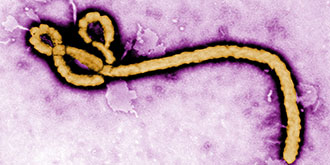
Ebola Outbreak 2026
The World Health Organization declared a new Ebola outbreak in the Democratic Republic of Congo and Uganda, caused by Bundibugyo virus, to be a public health emergency of international concern.
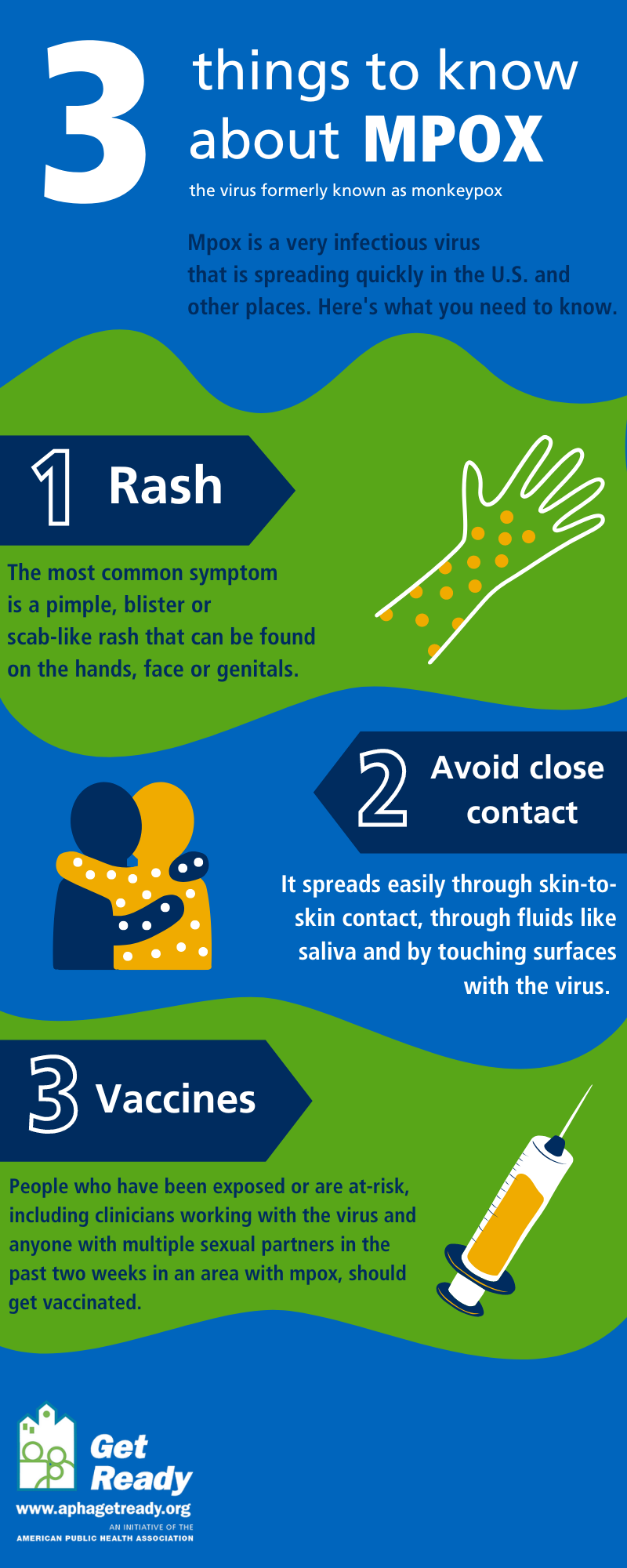
Mpox
Mpox is a disease that causes a rash that may be located near a person's genitals or on other areas such as the hands, chest or face.

2026 Hantavirus Outbreak
The cruise ship MV Hondius was the site of a severe outbreak of hantavirus in May 2026. At least three people have died and others are confirmed to have the virus. Learn more about the disease here.
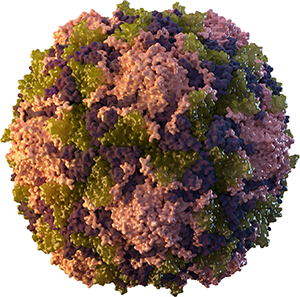
Polio
There is no cure for polio, but it is preventable through safe and effective vaccination.
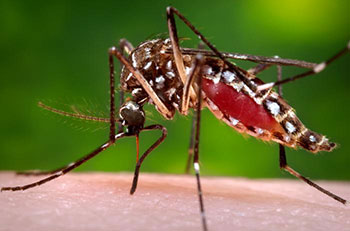
Zika
Zika virus is spread through mosquito bites and generally causes mild or no symptoms but is linked to some serious health concerns.