






Public Health Newswire from The Nation’s Health brings you the news you need now


Special Olympics improves health, removes barriers for people with IDD
- Yanit Asamnew
People with intellectual and developmental disabilities can face barriers to healthcare and poorer health. Special Olympics has developed health programs and conducted studies to aid in addressing disparities. In May, APHA's American Journal of Public Health published a special supplement spotlighting the organization's work.
Dimitri Christakis, MD, MPH, chief health officer of Special Olympics, spoke with The Nation’s Health about the organization’s health initiatives.
Tell us about the Special Olympics Health program.
In 1995 after the Special Olympics World Games in New Haven, Connecticut, (we) brought together about 7,000 athletes. Nearly 15% of participating athletes were too sick to compete due to unmet health care needs, many requiring treatments at the Yale emergency department. This revealed a critical gap and led to the creation of Special Olympics Health programming to ensure athletes are healthy enough to participate.
What has Special Olympics achieved for people with IDD?
Special Olympics provides opportunities for people with IDD to compete, be included and build social connections. It gives them opportunity to be seen, celebrated and included as well as make friends with other people. Participation is associated with improved health outcomes, including lower rates of depression among athletes compared to nonparticipants.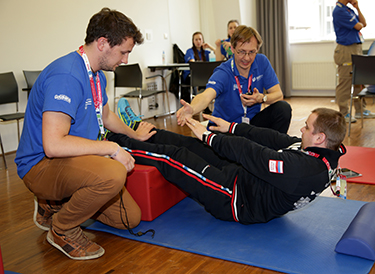
What barriers do people with IDD face in health care?
People with IDD face many barriers to health care, with the most significant being limited access to providers. Many rely on Medicaid, yet numerous clinicians do not accept it or feel unprepared to treat patients with intellectual and developmental disabilities. Additionally, lack of provider training can lead patients to feel unheard, disrespected or inadequately cared for, causing some to avoid seeking care altogether.
What can you share about some of the pillars in Special Olympics known as PATH?
The "prevention" pillar focuses on early childhood, with programs beginning as early as age 2 to promote healthy development and help children reach developmental milestones. The "assessment" pillar centers on screenings that identify untreated health issues and connect individuals to care.
The "training" pillar prepares current and future health care providers to better meet the needs of people with IDD through education and hands-on experience in conducting health screenings. (The fourth pillar is health system strengthening.)
How can Special Olympics health data be utilized in clinics and hospitals?
Special Olympics conducts ongoing surveillance of its athletes in the U.S. and globally, collecting health data through screenings. With about 6 million athletes worldwide, including 600,000 in the U.S., this data offers a valuable snapshot of the health status of people with intellectual and developmental disabilities.
What are some of the ways healthcare can be improved for people with IDD?
Improving healthcare for people with IDD requires expanding insurance coverage, strengthening provider training and improving communication. As health systems become more technologized, they can unintentionally create additional barriers, particularly for people with IDD, older adults and those with limited digital literacy, making it harder to access care.
People with IDD and their families often have little input on care. How can that change?
Health systems and providers must recognize that people with IDD have agency and should be actively involved in decisions about their care, either independently or with family or guardians. This begins with better training to ensure providers listen to and treat patients with IDD respectfully.
Where is health research at for people with IDD?
Research has largely overlooked people with intellectual and developmental disabilities, with about 75% of studies funded by the National Institutes of Health excluding them over the past two decades. As a result, many treatments and medications are not adequately tested for this population, and their specific health needs remain under-researched. This contributes to significant disparities, including a life expectancy 16 to 20 years shorter than those without IDD, often due to preventable and treatable conditions.
What can public health workers do to help address health disparities for people with IDD?
Public health workers can help by ensuring people with IDD are represented in health data, expanding access to care and research, and partnering with individuals and their families to better understand their needs. The goal is to ensure people with IDD have the same opportunity to be healthy, heard and treated as everyone else.
The interview was edited for space, clarity and length.
Photo caption: A Special Olympics participant is screened as part of the Healthy Athletes program in Austria in 2017. (Photo by Walter Luger, courtesy GEPA Pictures/Special Olympics International via Flickr Creative Commons)