





Public Health Newswire from The Nation’s Health brings you the news you need now


Guest Post
Op-ed: What makes a 'good fire'? Public health’s role in wildfire management
- Guest Author(s)
Prescribed fires are set to minimize future wildfires. To prevent health risks, they must be implemented with public health and communities, says Gill Capper, MPH, program manager for APHA’s Center for Climate, Health and Equity.
Public health needs to play a larger role in wildfire management to safeguard the health of communities and our forests.
Wildfires are intensifying and lasting longer, threatening people’s health and ecosystems across the U.S. Overgrown forests and degrading watersheds, coupled with rising temperatures and increasingly drier conditions driven by climate change, are giving rise to devasting and prolonged wildfire seasons, costing over $400 billion annually in suppression efforts and recovery.
The biggest public health threat is wildfire smoke, which spreads dangerous air pollutants such as fine-particle pollution and volatile organic compounds. Also known as PM2.5 and VOCs, the pollutants put people at risk for asthma attacks, chronic respiratory problems, cardiovascular issues, cancers and adverse birth outcomes. Low-income, tribal and rural communities disproportionately face these impacts the hardest.
This is underscored from events such as the 2020 Oregon wildfires, which killed nine people, burned over 1 million acres and destroyed more than 4,000 structures. In 2025, the Los Angeles wildfires killed at least 29 people and destroyed more than 16,000 structures.
These impacts highlight the urgent need to address wildfire risk through improving the health of forests and protecting communities. For millions of years, fire has kept forests healthy by clearing out overgrowth and debris, which allows sunlight to reach new and more resilient trees and enriches soil with nutrients. Indigenous and local communities have understood the importance of “good fire” to prevent “bad fire” and steward the land. 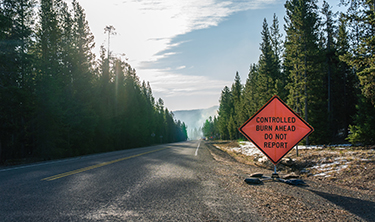
Research shows that prescribed fires, which are planned and intentionally set, are the leading management solution to preventing catastrophic wildfires. Also sometimes called controlled burns, prescribed fires help clear out dense, dry vegetation and underbrush, lowering the severity and reducing smoke levels for future wildfires. The method has become the leading practice in the U.S. for reducing wildfires.
But the benefits of prescribed burns come with a health danger if not implemented carefully — their smoke can cause harmful respiratory conditions for people.
Along with preparing communities who live in wildfire-prone areas — such as through evacuation planning and additional emergency response for vulnerable populations— public health advocates can address wildfire smoke dangers. This includes advocating for improved indoor air filtration, such as high-efficiency particulate air filters in homes, community centers, local libraries and other public facilities. Fire workers also need improved respiratory protective equipment during emergencies and prescribed fires.
Moreover, improved coordination between public health departments and forestry and land management offices is needed to save lives and prevent smoke from prescribed fires drifting over communities.
Policies that support both community health and ecological forest restoration will ensure that communities are protected from wildfire and prescribed-fire smoke exposure and related health impacts. By recognizing indigenous knowledge and practicing good fire with safeguards in place, we can reconnect with nature and improve our health, not just for ourselves, but also our ecosystems.
Photo by HABesen, courtesy iStockphoto