






Public Health Newswire from The Nation’s Health brings you the news you need now


2025 Annual Meeting
People with disabilities face greater substance use risks, barriers to care
- Mary Stortstrom
More than 48 million Americans struggle with substance misuse, federal statistics show. Among those are people with disabilities, who are at higher risk for substance use in general and for related disorders. Compared to the general population, people with disabilities have higher rates of past-year drug and alcohol use, daily nicotine use and prescription drug misuse. Yet the population may face more barriers to receiving help.
Among the drugs people with disabilities are more likely to use is cannabis. Jonathan Schulz, PhD, MPH, an assistant professor at the University of Nevada-Reno, and his research team examined data on people with disabilities, finding that 22% of respondents currently used the drug — higher the 15% rate of current use among the general population.
People with cognitive disabilities had the highest rate of cannabis use, at 29%. About 72% of the drug users consumed it to help relieve pain, while 60% used it to relieve stress or relax.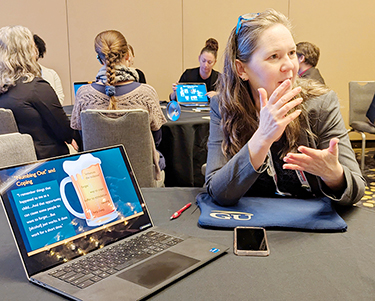
“Across the board, the top reasons people gave us were to help with pain and anxiety, or because they obtained a license for medical cannabis,” Schulz said during a session at APHA's 2025 Annual Meeting and Expo in November. “However, it may not be a good idea for people who have psychiatric disabilities to use cannabis for their pain, since it can exacerbate those psychiatric symptoms.”
Some people with disabilities also use substances to help them cope. Christine Gannon, an associate professor at Gallaudet University, a Washington, D.C.-based college for deaf and hard-of-hearing students, found there were multiple factors that influenced whether students consumed alcohol.
“Some students drink to cope, and some drink to party,” Gannon said during the APHA 2025 session. “If you have emotion-based coping mechanisms or adverse childhood experiences, you are more likely to have negative outcomes when you drink."
The most noticeable difference Gannon found between alcohol consumption among deaf and hard-of-hearing students when compared to the general population was that deaf and hard-of-hearing students had a much lower rate of citations for driving under the influence. But they also experienced more negative drinking-related outcomes, such as depression, isolation and health complications.
People with disabilities who have substance use disorders often struggle to get the care they need. Communication challenges, inadequate training for providers and stigma can make access difficult, according to a 2024 report from the Urban Institute. Those problems grow when patients need special accommodations, do not receive proper screening or lack reliable transportation. As a result, they are less likely to enter treatment.
Christine Gannon, an associate professor at Gallaudet University, visits attendees at a table during an APHA session on substance use risks for people with disabilities. Photo by Mary Stortstrom