






Public Health Newswire from The Nation’s Health brings you the news you need now


2025 Annual Meeting
How to defend public health at this critical moment
- Mary Stortstrom
How can we defend public health from the attacks of an administration that shows a disregard for science and facts, opting instead to use divisive rhetoric to characterize public health as a public enemy?
A panel of experts in fields ranging from law to epidemiology, including APHA Executive Director Georges Benjamin, discussed exactly that at the Monday General Session of APHA 2025.
Challenging the administration’s authority in the courts
One of the primary tools the public health community is using to push back against mandates from federal agencies is the legal system.
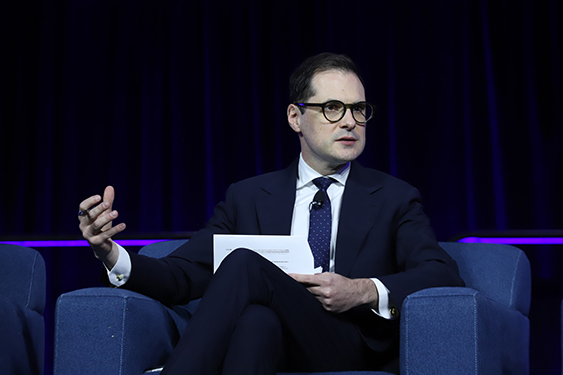 Panelist Richard Hughes, a law partner at Epstein Becker Green in Washington, D.C., said federal health statutes have been set up to give the secretary of the U.S. Department of Health and Human Services “a tremendous amount of authority,” particularly when it comes to setting vaccine policy.
“We have seen a steady stream of what I would say are unlawful actions that undermine the Administrative Procedure Act,” Hughes said. “It is possible to challenge the secretary in court. As a vaccine policy lawyer, this was the last place that I really wanted to be talking about using the courts as the check on our nation’s key health codes, but we had to do it in the NIH grants case, which thankfully, APHA took the leadership role on.”
Hughes also discussed the Supreme Court case surrounding the Chevron deference, saying he’s concerned about how that decision will affect the role of experts in public health authorities and that the courts are decreasing deference to subject matter experts.
Traditionally, lawyers deferred to experts within agencies if there was any ambiguity in the law, and they were allowed to make an interpretation of that. In overturning Chevron, the Supreme Court took over the authority to make those decisions.
“At the end of the day, we saved the U.S. Preventive Services Task Force, but we have compromised the role of experts, and I’m really concerned that the Supreme Court will continue to erode the role of experts in our society, especially when it comes to public health policymaking,” Hughes said.
Empowering the people of public health
Beyond issuing legal challenges, public health officials in states and regions of the U.S. are banding together in support of public health. Julia Spiegel, founder and CEO of GovAct, described states as being “laboratories of democracy” and public health.
"This is a moment where governors can use their authorities, using their executive powers working across their agencies with their health agency leads and departments to meet those needs in a concrete way,” Spiegel said.
The Governors Public Health Alliance, a cross-state public health architecture created to make sure that the states are delivering on the needs of their residents, has been helpful in ensuring vaccine access. More than 25 states have taken action to make sure things such as the latest COVID vaccine are available and covered by insurance now that the federal government is no longer requiring it.
“In this moment, in the absence of strong national leadership, it is the people that are stepping up when powerful institutions pull back,” said Skye Perryman, president and CEO of Democracy Forward. “Whether you look in sectors like higher ed, in sectors like medicine, sectors like science and the environment, wherever you look, you’re going to find individual scientists and associations like this one that has the membership stepping up.”
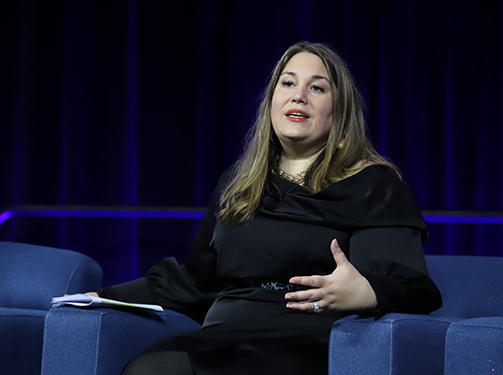 When asked to give their advice on how individuals in public health can push back, the panelists emphasized the importance of building community.
“Organize, organize, organize,” said Gregg Gonsalves, an epidemiologist and associate professor at Yale School of Public Health.
“Find ways to build community so you don’t feel discouraged,” Perryman said. “That’s how the administration advances its agenda, by making us feel beaten down.”
APHA’s Benjamin offered succinct, but powerful, words of encouragement: “Stand up, speak up — we’ve got your back.”
Fries Prize Awarded to Christopher J.L. Murray
Monday’s general session also included the awarding of the James and Sarah Fries Prize for Improving Health to Christopher J.L. Murray, professor and chair of health metrics sciences at the University of Washington and director of the Institute for Health Metrics and Evaluation. His work focuses on the global burden of disease, a systematic effort to quantify the extent of health loss over time due to diseases, injuries and risk factors by age, sex and geography. Murray served as the World Health Organization’s executive director of the Evidence and Information for Policy Cluster from 1998 to 2003. He has authored over 670 journal articles and authored or contributed to 17 books.
Photos: Richard Huges; Skye Perryman. Photos courtesy EZ Event Photography.