






Public Health Newswire from The Nation’s Health brings you the news you need now


2025 Annual Meeting
Experts explore ways to improve male health throughout the life span
- Mark Barna
Women tend to have longer lives then men, with women in the U.S. living about six years longer. Reasons for the disparity involve biology, environment and culture, all of which animate men’s general attitudes toward health.
At a pre-APHA 2025 event Saturday, “Men and Boy’s Health Summit: Addressing Unmet Needs Through Programs and Polices,” APHA’s Men’s Health Network presented a workshop on ways to improve health outcomes of males for all age groups. Barriers involve society’s general ambivalence toward men’s health.
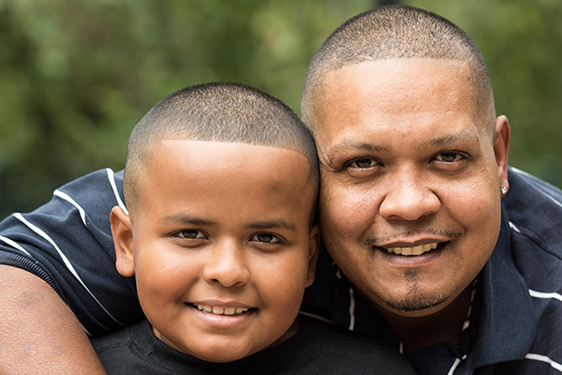 “Gender affects health in a variety of ways, including expected lifespan,” Clara Wellons, co-program planner for the Men’s Health Caucus, said. “Men’s expected lifespans and poor health outcomes are tied directly to their gender and are a product of an inequitable social system.”
Women in the U.S. can expect to live to about age 81, according to 2023 data from the National Center for Health Statistics, while men live less than 76 years.
The reasons are complex. Social studies show that men are more likely to undertake risky adventures, hold dangerous occupations and adopt unhealthy habits, such as smoking, alcohol and drug use to control stress and anxiety. They are also more likely to die by suicide.
Other studies show that at birth male infants are more vulnerable than female infants to disease. Slower development of the prefrontal cortex leads to excessive risk taking during the teen years and early adulthood, and middle-aged men are prone to cardiovascular ailments, such as heart attacks and strokes.
Men also tend to present a show of invulnerability and confidence, contributing to their being less likely than women to seek medical care, experts say.
“Men have lower levels of health-care seeking, in part because of socialization away from vulnerability and help-seeking, too often waiting till it’s an emergency,” said Jon Gilgoff, research manager at the University of Maryland School of Social Work and co-program planner for the Men’s Health Caucus. “These issues adversely impact men, families, communities and society as a whole. The human and financial cost is extremely high.”
Networking, partnerships and advocacy
At a time when adolescent females are visiting gynecology offices, where they habituate to seeking health care, no counterpart exists for male adolescents, said Ron Henry, founder and president of Men’s Health Network.
“We need to think about how to keep boys connected to the health care system,” Henry said.
Health experts discussed the importance of networking and partnerships in the burgeoning men’s health movement. Henry said networking helped his organization establish Men’s Health Week, which President Bill Clinton signed into law in 1994. During the week in June before Father’s Day, organizations offer events that increase awareness of men’s and boys’ health, encouraging regular exercise and health screenings.
Public health plays a vital role in male health. Efforts in recent decades by health officials to communicate the health dangers of smoking, improve workplace safety and offer better substance use treatments have improved male longevity, Henry said. Between 1979 and 2007, the life expectancy gender gap dropped from 7.7 years to 4.7 years, but it has since crept up.
“Let’s think more about public health’s role in the lifespan gender gap,” Henry said.
Male health organizations also need to partner more with health care systems on solutions to increasing health care office visits, he said.
Advocating for policies at all government levels that improve the health of men and boys is another important step, experts said. But it can be hard to convince decision-makers that gender health is an issue. That’s why it is important to gather and understand the data showing disparities.
Advocates need to meet with decision-makers not only on gender health, but also on male health for people of color, said Okey Enyia, a research scholar at the National Institutes of Health and founder of Enyia Strategies. Black men, for example, generally have shorter lifespans than white, Asian and Hispanic men.
“If you are not at the table, you are on the menu,” Enyia said. The politics of health “will influence you whether you want it to or not.”
Photo by Juanmonino, courtesy iStockphoto.