






Public Health Newswire from The Nation’s Health brings you the news you need now


2025 Annual Meeting
Excellence in Climate Leadership Awards honor innovation, equity in climate work
- Mary Stortstrom
APHA’s Center for Climate, Health and Equity presented its annual Excellence in Climate Leadership Awards at APHA 2025 to public health organizations and individuals who have demonstrated remarkable commitment, leadership and innovation in the fight against climate change.
Climate change is a public health matter, affecting the air we breathe, the food we grow and the transmission of disease as global temperatures continue to rise. Extreme heat, severe storms, air pollution, wildfires and the spread of mosquito- and tick-borne diseases threaten the physical and mental health of communities around the globe.
Some populations are disproportionately affected by the health risks associated with climate change, such as people living with disabilities and chronic illnesses, communities of color, people experiencing homelessness and outdoor workers.
Awards are presented in three categories: to APHA-Affiliated public health associations, an APHA member group and individual APHA members who are championing healthy, sustainable and equitable climate solutions.
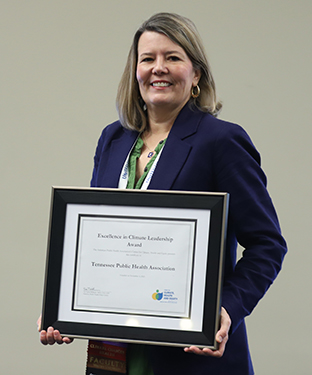 The Tennessee Public Health Association was selected for an award for its work to build climate resilience among rural communities, with a specific focus on extreme heat adaptation and flood mitigation strategies. Through grant funding provided by the National Association of County and City Health Officials, the Tennessee Public Health Association developed a “train the trainer” curriculum, equipping community leaders with the knowledge of climate’s impacts on health so they could then offer the training to their communities.
TPHA isn’t slowing down either — it’s ramping up its preparedness workshops and expanding its curriculum to include the most up-to-date information on climate projections for the state.
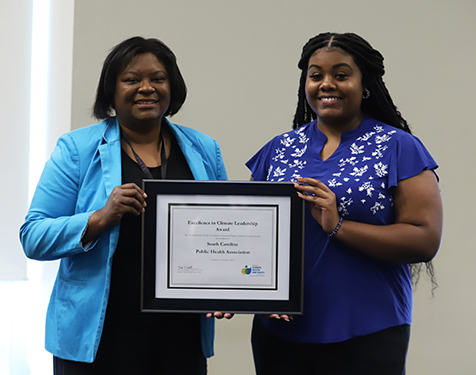 The South Carolina Public Health Association was recognized for its work to address heat and energy challenges in Columbia, South Carolina. Through the Smart Surfaces Project, SCPHA partnered with APHA and the Smart Surfaces Coalition to promote technologies that help cool cities and improve resilience to extreme heat. The association launched a mini-grant program that supported local organizations, students and researchers in implementing or studying Smart Surfaces.
SCPHA’s future plans include continuing its tree planting initiative, aimed at creating cooling green spaces; expanding work with the Gills Creek Watershed Association on creating rain gardens at community libraries; and collaborating with the South Carolina Department of Environmental Services on the “Breathe Better” program, which educates students about the importance of air quality on school campuses.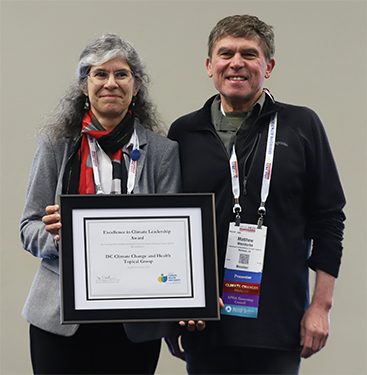
The Intersectional Council’s Climate Change and Health Topical Group received an award for its focus on collaborative efforts in climate, health and equity, bringing APHA members from across Sections together through monthly meetings, annual webinars and events.
The ISC Climate Change and Health Topical Group is creating a strong network of public health professionals committed to climate action. Its future plans include continuing to hold monthly meetings and organizing a roundtable session and social event at APHA’s 2026 Annual Meeting.
Individual awards went to: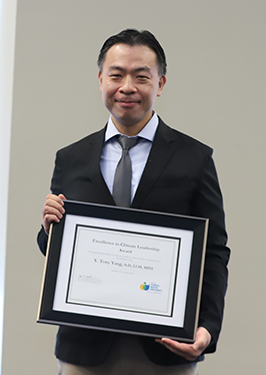
Y. Tony Yang, endowed professor of health policy and associate dean for health policy and population science at George Washington University’s School of Nursing, for making climate change a public health priority through policy leadership, scholarship and a deep focus on equity. In 2024, he was named one of 18 next-generation research leaders. The leaders subsequently developed the “For People, For Planet” project to improve health research sustainability in the U.S. and U.K.
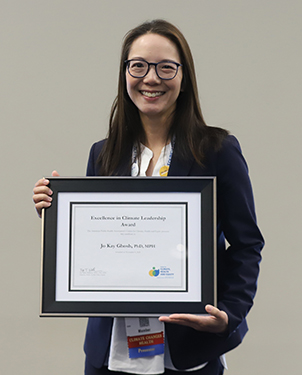 Jo Kay Ghosh, director of research and evaluation at Heluna Health, for her outstanding contributions to addressing the health impacts of climate-related disasters such as wildfires, extreme heat, flooding and power outages, with a focus on community preparedness. Ghosh has created accessible public resources, including toolkits and infographics in multiple languages, and has spoken with media outlets to raise awareness about climate-related health risks.
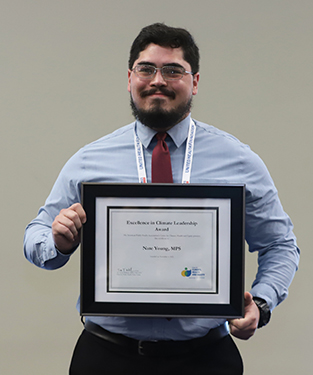 Nate Young, program manager with the Pima County Health Department’s Office of Heat Response and Relief in Arizona, for coordinating a county-wide effort to respond to and protect residents from extreme heat. Young and his team incorporate epidemiological and social vulnerability data, using data analysis to inform decision-making.
Photos: Representing the Tennessee Public Health Association, South Carolina Public Health Association, Intersectional Council’s Climate Change and Health Topical Group; Y. Tony Yang; Jo Kay Ghosh; Nate Young. Photos courtesy EZ Event Photography.