






Public Health Newswire from The Nation’s Health brings you the news you need now


Public Health Newswire
Q&A with NAACP: Addressing the growing environmental harms of AI data centers
- Yanit Asamnew
The NAACP has long been on the front lines of environmental justice, and is addressing new threats as they arise. One is AI data centers, massive campuses of warehouse-like buildings that are being used to house and cool the computer equipment that supports the nation’s growing use of AI technology. With growing reliance on AI to serve both everyday and professional needs, data centers run by companies such as Meta, Apple, Google Cloud and Amazon Web Services are predicted to eat up as much of 12% of all U.S. electricity by 2030. Google alone reported that its greenhouse emissions had risen 48% over five years as of 2024.
The NAACP is raising alarms about the disproportionate impact of the centers, which are often located in low-income neighborhoods and communities of color.
In September, the organization released guiding principles on AI data centers, putting technology companies on notice about their environmental harms and giving residents tools they can use to raise awareness and fight back.
Abre’ Conner, JD, director of the NAACP Center for Environmental and Climate Justice, spoke to The Nation’s Health about the health harms of AI data centers and how public health professionals can work to protect communities from harm. 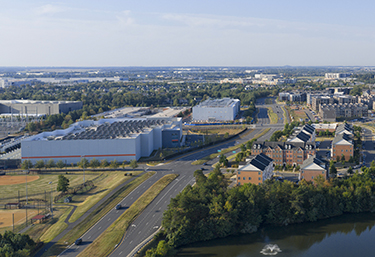
What possible dangers do AI data centers pose for human health?
They carry with them a number of health concerns. They use enough electricity to power a midsize city. They’re straining water treatment plants and water infrastructure that could be used to actually ensure that the people who live there have access to safe drinking water. There are air quality concerns. And they’re putting these AI data centers in places where there’s already existing infrastructure.
It raises concern about breathing problems, water contamination and infant mortality rate. Data centers exacerbate the problems that are already in the communities. And so we have to talk about the environmental health concerns with the public health concerns, because they’re so correlated.
What’s interesting about this moment is that we’re also seeing this conversation expand into new places. It’s expanding into communities who haven’t necessarily organized in the past around environment and climate justice issues. These are the same conversations that frontline communities have been trying to highlight for years.
Do the supposed benefits of AI data centers, such as employment and better technology, outweigh the health risks?
We actually put together a set of community guiding principles that was informed by nearly 100 different groups, organizations, coalition partners and allies. It was the first set of national environmental and climate justice-focused guiding principles for data center engagement.
And one of the things that the community said was really important, which is that jobs cannot justify the harm. The core problem is that jobs are being used to justify environmental and climate harms within the community for decades and decades afterwards.
And if people aren’t able to breathe in their community, if people’s life expectancies are being put on the line, then the conversation really needs to be: ‘How do we do this in a way that allows for people to be able to continue to live their full lives, to be able to reap the benefits of whatever supposed technology and innovation that’s supposed to come from this without them having to continue to shoulder the brunt of the harm when it comes to supposed innovation?’ We don’t want to repeat the practices of the past.
What else should people working in public health know about AI data centers?
A lot of folks in the environment and climate justice space have really good ideas that can also help to build strategy, as opposed to starting and reinventing the wheel.
The other way to work with folks in public health is to build shared strategies. When there are meetings, when there are convenings, when there are strategy sessions, invite folks from the environment and climate justice space into those conversations.
That will help people to understand just how similar a lot of these conversations really are. But we’re not changing strategies, we’re not changing tactics — we might just be changing messaging so it resonates with the audience who is looking at it from a particular lens.
What is the big picture when it comes to data centers?
We have to think about the larger ecosystem of our planet, because none of this will really matter if we don’t have a planet moving forward. So it is not about relocating, it’s about coming up with the solution that’s going to help all of us in the future feel good about the choices that we’re making today.
For more information on the “Frontline Framework Community Data Center Guiding Principles,” visit NAACP.
This interview was edited for length and clarity.
Caption: An Amazon data center looms over single-family homes in July 2024 in Stone Ridge, Virginia. The NAACP is raising alarms about the health-harming impacts of the centers. (Photo by Gerville, courtesy iStockphoto)