Working together to build safer, more resilient communities in the face of this growing threat
Use this resource hub to discover actionable steps you can take to address the challenges of extreme heat, from raising public awareness and strengthening healthcare system preparedness to advocating for heat-resilient communities.
Test your heat safety knowledge! Take our interactive quiz to learn how to prevent heat-related illness and protect yourself and your community.
Extreme Heat Group Training Model: APHA, in partnership with ecoAmerica’s Climate for Health, is expanding its Extreme Heat & Health: Strategies for Prevention and Action training through a new Train-the-Trainer group modellaunching this spring. This free, virtual course (3 CE credits) equips public health professionals, clinicians, and community leaders with tools to prevent heat-related illness and advance equitable, community-wide solutions. Participants can complete the training individually or host group sessions using ready-to-use facilitation materials, making it easy to bring critical heat and health knowledge directly to your community.
Alliance for Heat Resilience and Health (AHRH): Since 2024, APHA has served as a convening partner of the Alliance for Heat Resilience and Health (AHRH), a national coalition advancing coordinated action on extreme heat. This spring, APHA and AHRH are launching a new state-level engagement effort to support action during National Heat Safety Week (May 18–22), including the release of a Heat Safety Awareness toolkit designed to help partners lead efforts in their own communities. Explore the toolkit and watch our recent workshop to learn how you can get involved.
The Heat Safety Awareness Toolkit outlines three levels of engagement to help state and local partners take action:
Level 1: Get the word out — Share heat safety tips and resources across your networks to raise awareness in your communities.
Level 2: Elevate the issue — Partner with local or state leaders to issue an official Heat Safety Week proclamation using ready-made templates.
Level 3: Drive lasting change — Advance policies that strengthen protections from extreme heat, using real-world examples and guidance from the toolkit.
Cities for Smart Surfaces: APHA has partnered with the Smart Surfaces Coalition on the Cities for Smart Surfaces project, along with the National League of Cities, Metropolitan AME and many others. This groundbreaking project brings together six APHA affiliates from across the country to explore the potential of smart surfaces to improve public health in urban environments. Learn more.
🔎 What's New
Watch: Health Impacts of Extreme Heat
Extreme Heat & Health Training
Covering both individual care and systemic solutions, this training will empower you to be a leader on extreme heat and health solutions. There are now two ways to take the training: complete it individually at your own pace or bring it to your community through the new Group Training model.
The Nation's Health Podcast by The American Public Health Association
This summer APHA’s Center for Climate, Health and Equity launched The Heat Rx, a new three-part podcast series on extreme heat with Nation’s Health Podcast.
Protecting Health from Extreme Heat Webinar Recording: State Leadership in Action - APHA and the Alliance for Heat Resilience and Health (AHRH) discuss how states can lead the way in protecting communities from extreme heat with health leaders and policymakers. Watch the recording.
Beat the Heat Webinar Recording: A Multi-Stakeholder Approach with CDC's New Heat and Health Initiative - APHA, the National League of Cities and WEACT for Environmental Justice explore the Centers for Disease Control and Prevention’s newly launched Heat and Health Initiative in this action-oriented webinar. Watch the recording.
Extreme Heat Congressional Briefing - The Center for Climate, Health and Equity hosted a congressional briefing on July 8, 2024, focused on policy recommendations to reduce the health impacts of extreme heat. Read the highlights.
When the Heat is On: How Cities Can Protect At-Risk Residents - APHA and the National League of Cities shared three solutions for local leaders to combat extreme heat. Read the article.
Energy Insecurity Toolkit
Understanding Energy Insecurity in the Field Toolkit
This toolkit serves as a guide for community members, researchers and local practitioners, especially those in the field of public health, to understand how energy insecurity manifests within their communities, define the adverse effects of energy insecurity, and implement effective strategies to mitigate its repercussions. The toolkit will equip stakeholders with resources on conducting community-based focus groups, including best practices in outreach and recruitment strategies as well as innovative methods for disseminating the findings and insights on how these conversations can inform subsequent actions towards energy equity and justice.
Extreme heat is one of the most dangerous climate-related threats we face. Here’s why it matters:
🧑⚕️ Extreme heat kills more people in the U.S. than all other weather-related disasters combined. And it’s getting worse each year due to rising temperatures and urban heat islands.
🌍 Fossil fuel-driven climate change is responsible for 37% of global heat-related deaths. Communities with fewer resources are hit hardest.
💸 Heat causes an estimated $100 billion in economic losses each year, primarily due to lost productivity. It also drives $1 billion annually in direct healthcare costs.
🏥 Each summer, heat leads to 235,000 ER visits and over 56,000 hospital admissions. Most of these are preventable with the right policies and preparedness.
🧾 Yet only 37% of Americans recognize heat waves as a serious health threat.- APHA/ EcoAMerica Survey
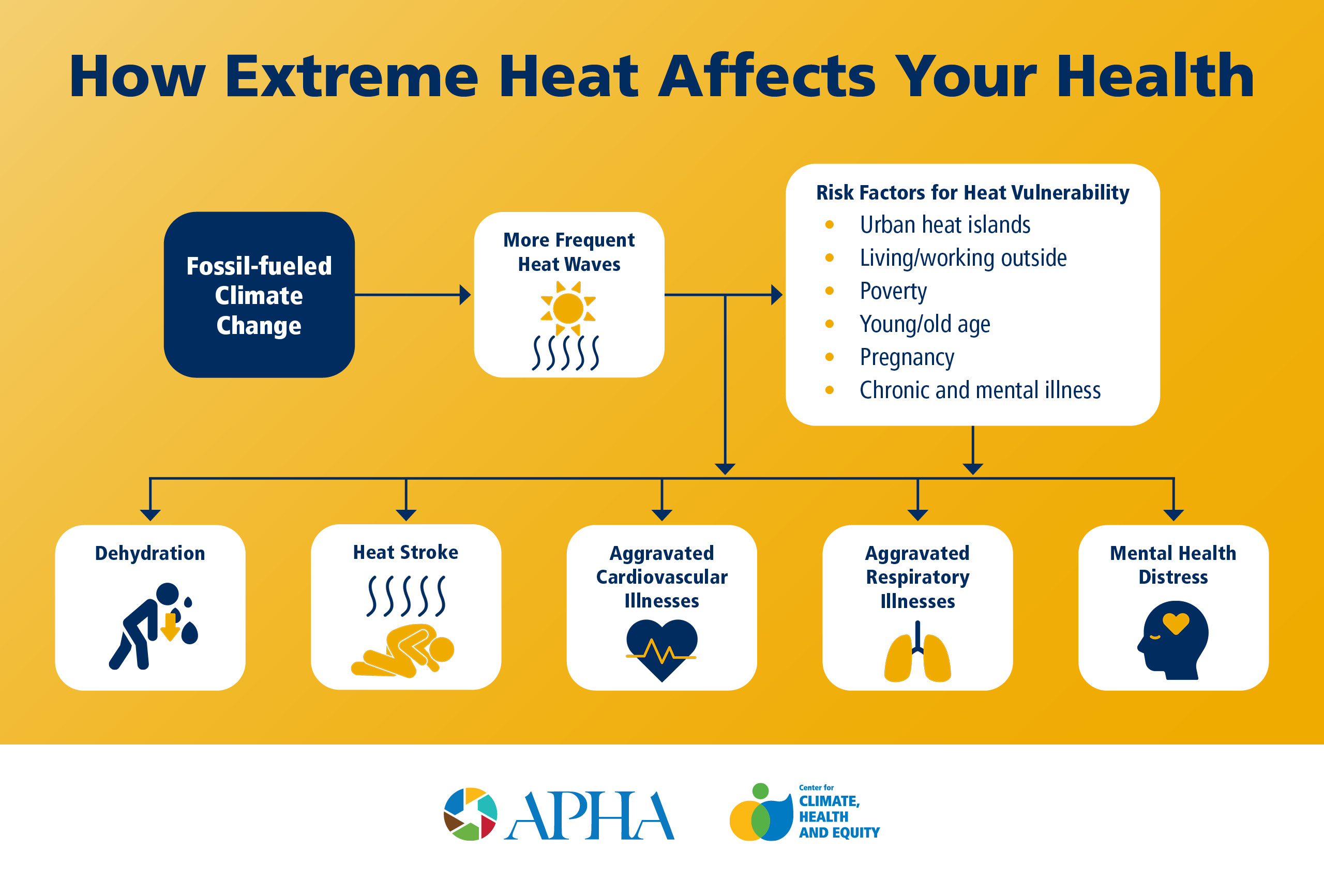
Extreme heat is a significant and escalating public health crisis in the U.S., claiming more lives annually than hurricanes, floods and tornadoes combined. This alarming trend is worsening due fossil fuel-driven climate change, which accounts for 37% of heat-related deaths worldwide.
The impacts of extreme heat are broad, straining infrastructure and disproportionately affecting vulnerable populations such as older adults, children, individuals with chronic illnesses, low-income communities, people experiencing homelessness, etc... In 2023 alone, extreme heat accounted for at least 2300 deaths in the United States, which many experts consider to be a significant underestimate. Furthermore, heat illness causes $1 billion in healthcare costs annually in the U.S., along with $100 billion total cost to the U.S. economy, primarily driven by lost productivity. With heat-related mortality projected to increase substantially due to climate change, it is imperative that health systems, public health agencies, and society at-large rapidly develop the policies and infrastructure necessary to build resilience against extreme heat.
There is a need for increased public awareness about the dangers of extreme heat and the importance of implementing preventative measures like investing in heat-resilient infrastructure and committing to policies that address the root causes of climate change.
APHA joined Arsht Rock’s Extreme Heat Resilience Alliance in 2023. EHRA empowers more effective and informed heat resilience leadership at the local, national and global level.
For more information about our extreme heat and health work, contact Shweta Arya.
Take Action to Build Heat-Resilient Communities
Studies consistently show that health professionals are among the most trusted messengers on climate change and its health impacts. This makes them powerful allies in educating both policy-makers and the public about the dangers of extreme heat and advocating for preventative measures. This hub equips you with the resources and knowledge to effectively address this challenge. Here are some ways you can take action towards building heat-resilient communities.










_FeatureList_1-37_1AspectRatio.jpg?language=en)