




Public Health Newswire from The Nation’s Health brings you the news you need now


Public Health Newswire
Op-ed: Catastrophic flooding in Tibetan river valley was not a natural disaster
- Guest Author(s)
People who contribute the least to the world’s carbon footprint are suffering the most from the impact of climate-driven disasters, says Shweta Arya, senior project manager for smart surfaces at APHA’s Center for Climate, Health and Equity.
Seeing the devastating images of Nepal and Tibet from the recent catastrophic flooding aches my heart.
Too often, we hear these events described as “natural disasters” — as if they were inevitable. But there is nothing inevitable about them. On Aug. 26, glacier melt destabilized a massive rock outcrop on a Nepal mountain, which crashed into glacial lakes, sending a mass of water down Lhende Khola river valley. This catastrophe was driven by human-caused climate change and our warming world. Over 1,000 people are estimated to have been killed, though that number will certainly rise.
This spring, I took my 18-year-old son on a Himalayan trek of a lifetime to Everest Base Camp. Beyond the magnificent views of Everest and the Khumbu, what stayed with me most were the modest Nepali communities we passed — stone houses, prayer flags, children walking to school along narrow ridgelines. As we climbed toward 17,000 feet, resources grew scarce. There were no motor vehicles, of course; human porters and animals carried everything needed to survive. Our guide explained that solar energy is the only way many villagers can power their homes.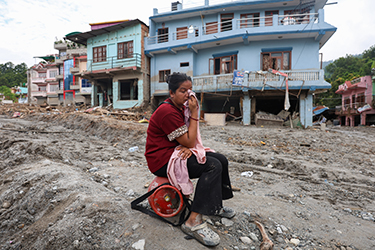
The most damning truth of the climate crisis is that those who contribute least to raising emissions — who have never lived a lifestyle that pollutes at scale — bear the brunt of its worst impacts.
The carbon footprint of the people living in the China-Nepal river valley is negligible. Nepal contributes roughly 0.1% of global greenhouse gas emissions, and its per capita carbon dioxide emissions are around 0.13 tons a year. In the U.S., that number is more than 14 tons per person — over 100 times higher.
For families who saved for generations to build a home or buy a small shop in the river basin, a lifetime of security disappeared in hours. I keep thinking about the children we passed on those ridgelines, backpacks too big for their shoulders, laughing as they raced each other home.
Responding to the catastrophe, Nepal has launched a diplomatic push to seek climate-related compensation from major greenhouse gas emitters, framing post disaster assistance as a matter of “moral liability,” not charity. On Sept. 1, Foreign Minister Shisir Khanal called for legal and moral accountability from the world’s largest emitters — China, the U.S. and India.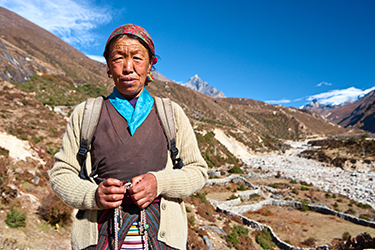
I know the news cycle will move on. I know those valley communities will be rebuilding for years, often without adequate help. But for those of us with a platform, a vote or a voice, there is work to do.
Start where you are. Take APHA and ecoAmerica’s Climate Ambassador training and learn how to talk about climate and health in your own community. Use the Meeting the Moment election toolkit from the Medical Society Consortium on Climate & Health to help you get involved in your local elections, ask candidates what they will do to protect people from climate harm and to move us off fossil fuels.
Give what you can to relief efforts for Nepal, and push university hospitals, faith groups and other entities to back loss and damage from climate change and adaptation funding for vulnerable regions.
Top photo: A woman wipes her face in the aftermath of the flood in the Lhende Khola river valley on Aug. 26 on the Nepal-Tibet border. Photo by Daniel Ceng, courtesy Anadolu/Getty Images. Bottom photo: A woman in Nepal holds prayer beads. Photo by Hadynyah, courtesy iStockphoto.